Industry Insights / EV & Heavy SUV Wheel Fitment
EV Wheel Fitment Guide: Load Rating, Offset & Brake Clearance
2026-07-14

EVs and heavy SUVs turn wheel fitment from a simple size choice into a broader engineering decision. These vehicles often combine higher curb weight, larger brake packages, wider tyres and immediate torque delivery. Checking diameter and bolt pattern alone is like confirming shoe size while ignoring load, shape and whether the sole hits the brakes.
Load Capacity Starts with the Vehicle's Axle Rating
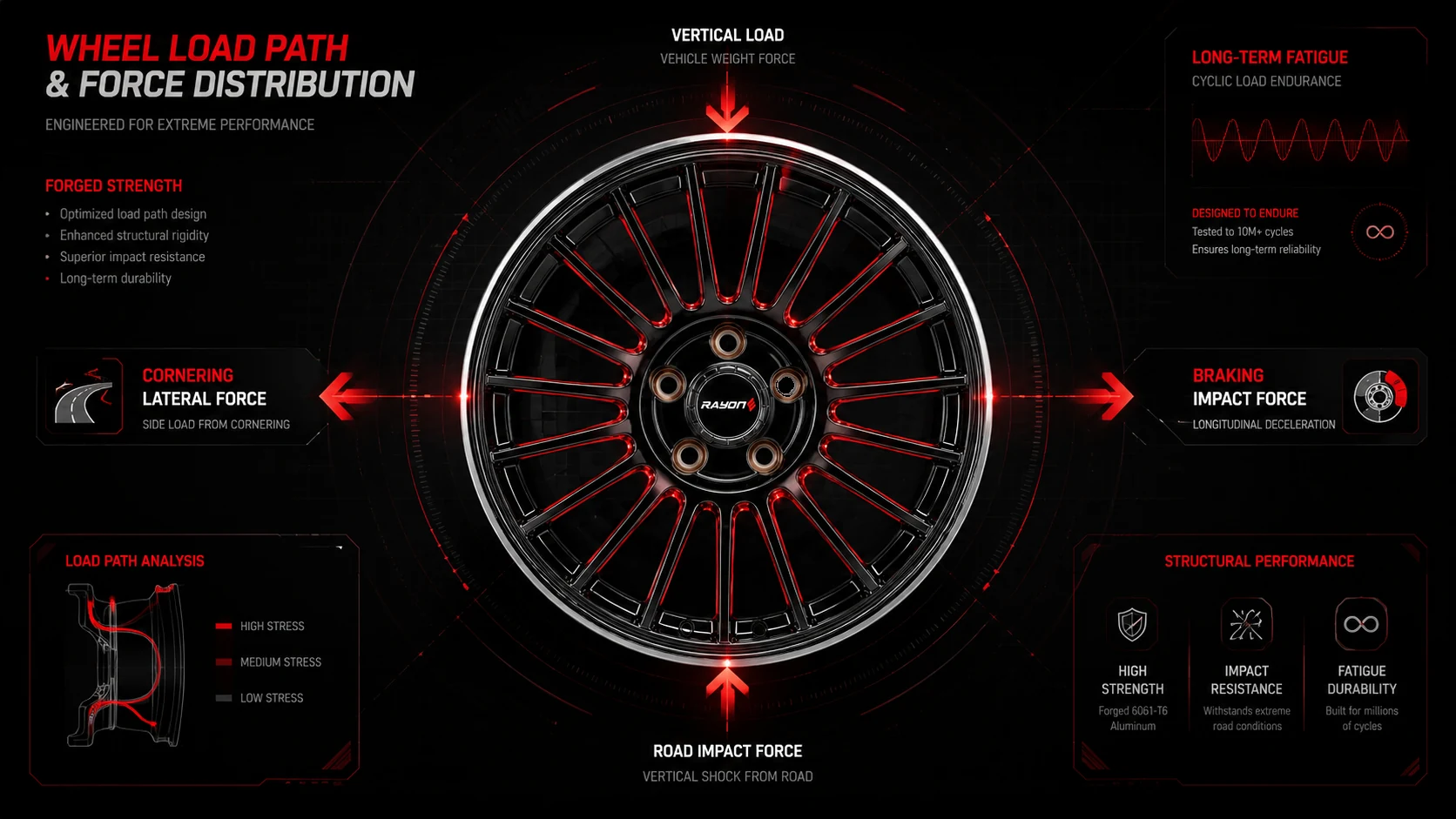
The maximum wheel load stated by the wheel manufacturer must not be exceeded. Industry installation guidance uses one half of the vehicle's highest gross axle weight rating as the minimum load requirement for each wheel. That figure should come from the vehicle label or verified technical data—not from vehicle appearance, powertrain type or dealer memory.
Different battery packs, drivetrains, brake packages and body variants within one model line can carry different axle ratings. A dealer inquiry should therefore identify the exact model year, variant and axle rating. Treating a model name as complete fitment data is one of the aftermarket's most renewable mistakes—it can return with every new generation.


Offset Controls Position; Brake Clearance Determines Whether It Fits
Wheel width and offset work together to determine inboard and outboard position. Too much outward movement can create tyre-to-fender interference; too much inward movement can contact the caliper, upright or suspension. Centre bore, PCD, bolt or nut seat, thread specification and effective engagement must also be correct. The wheel must sit flush on the mounting face; incorrect hardware or unverified spacers are not an engineering solution to a geometry problem.
Large brake calipers make a three-dimensional clearance envelope or physical test fit essential. Rim diameter alone cannot show whether the back of the spokes clears the caliper. Before tyres are mounted, the wheel should be test-fitted at every position and checked against the caliper, balance weights, suspension, fender and full steering travel.
Larger Does Not Automatically Mean Better for an EV
Increasing wheel diameter normally requires a lower-profile tyre and may bring more rotating mass, different aerodynamic behaviour, reduced ride compliance and higher tyre cost. The real efficiency effect depends on total assembly mass, width, tread, pressure and vehicle control strategy, so dealers should not promise a fixed range gain or loss without test data.
Dealer Fitment Data Checklist
Model year, make, model, trim, market and drivetrain.
Front and rear GAWR or verified vehicle load information.
OE wheel and tyre size, width, offset, PCD and centre bore.
Standard or optional brake package plus caliper clearance profile.
Street, towing, payload, winter, off-road or performance use.
Desired diameter, width, finish, tyre size and local approval needs.
Reliable EV and heavy-SUV fitment is not about finding a wheel that accepts the bolts. Load, geometry, brake space, tyre specification and documentation must all work together. The better the input data, the more effectively a supplier can remove risk during design, machining and fitment validation.
Reference: Aftermarket Wheel Installation Guidelines published by the SEMA Wheel & Tire Council and hosted by the U.S. National Highway Traffic Safety Administration. This article supports purchasing and fitment communication; it does not replace vehicle-manufacturer requirements, local law or professional installation inspection.